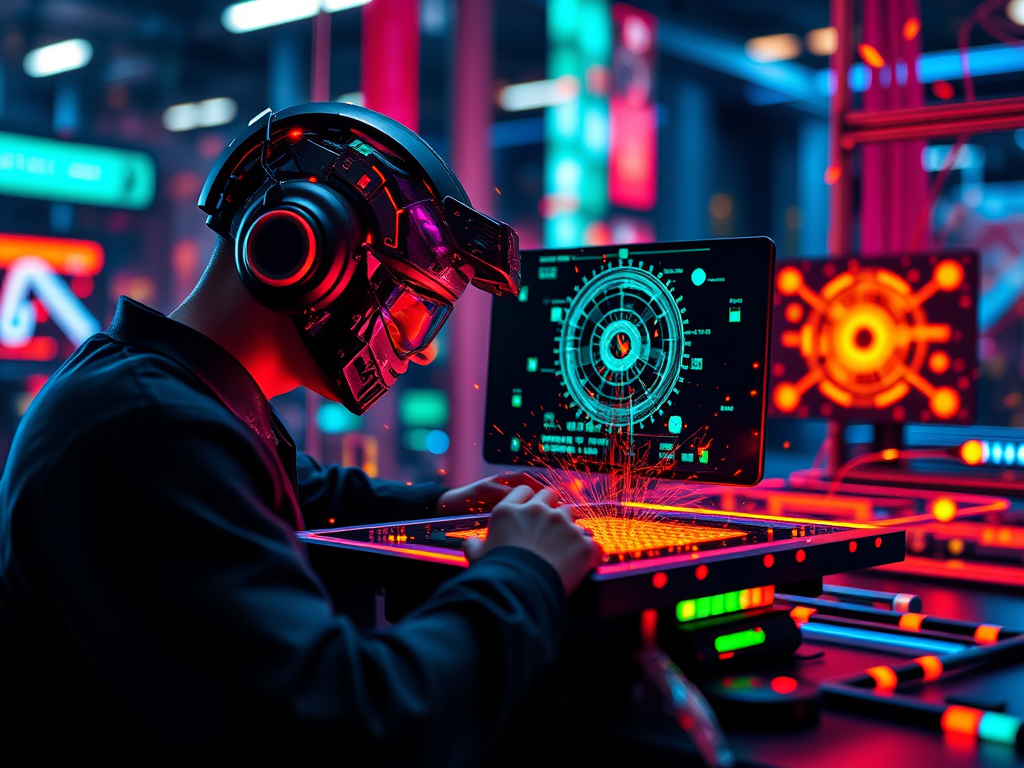
In the age of digital transformation, AI-generated imagery has emerged as a groundbreaking force, reshaping industries from marketing and entertainment to healthcare and education. Tools like DALL-E, MidJourney, and Stable Diffusion have democratized access to high-quality visual content, enabling users to create stunning images from simple text prompts. As adoption surges, the market for AI-generated imagery is becoming fiercely competitive, with tech giants and startups alike vying for dominance. This article explores the latest trends, key players, challenges, and future opportunities in this rapidly evolving space.
1. The Evolution of AI-Generated Imagery: From Niche to Mainstream
AI-generated imagery, once a futuristic concept, has exploded into mainstream consciousness. Early experiments with Generative Adversarial Networks (GANs) in the 2010s laid the groundwork, producing rudimentary but intriguing visuals. Today, advancements in diffusion models and transformer architectures have unlocked unprecedented realism and creativity.
Platforms like OpenAI’s DALL-E 3 and Stability AI’s Stable Diffusion 3 now generate photorealistic images, intricate art styles, and even 3D models. These tools are no longer limited to tech enthusiasts; businesses, content creators, and educators are leveraging them to cut costs, accelerate workflows, and unlock new creative possibilities.
2. Key Trends Shaping the AI-Generated Imagery Market
a. Rise of Multimodal AI Systems
Modern AI image generators are increasingly integrated with other modalities, such as text, audio, and video. For example, Google’s Imagen 2 combines text-to-image generation with video synthesis, while Adobe Firefly seamlessly blends AI-generated visuals with traditional design tools like Photoshop. This convergence is enabling richer, more interactive content creation experiences.
b. Demand for Real-Time Generation
Speed is becoming a critical differentiator. Startups like Runway ML and Leap AI now offer near-instant image generation, catering to industries like gaming and live marketing where real-time content is essential.
c. Hyper-Personalization
Brands are using AI-generated visuals to deliver personalized marketing campaigns at scale. For instance, e-commerce platforms like Shopify integrate AI tools to create product images tailored to individual user preferences, boosting engagement and conversion rates.
d. Ethical and Open-Source Movements
Amid concerns about bias and misuse, open-source platforms like Stable Diffusion are gaining traction. Communities are advocating for transparent training data and ethical guidelines, pushing companies to prioritize responsible AI development.
3. Market Competition: Who’s Leading the Race?
The AI-generated imagery market is projected to grow at a CAGR of 23.5% from 2023 to 2030 (Grand View Research), attracting both established tech firms and agile startups. Here’s a breakdown of the key players:
a. Tech Giants: Scale and Integration
- OpenAI (DALL-E): A pioneer in text-to-image generation, OpenAI dominates with its user-friendly interface and partnerships with Microsoft. Its integration into Copilot and Azure AI services gives it a strategic edge.
- Google (Imagen): Leveraging its vast data resources and AI expertise, Google focuses on research-driven innovation, particularly in video and 3D model generation.
- Adobe (Firefly): By embedding AI tools into its Creative Cloud suite, Adobe targets professional designers, emphasizing copyright compliance and commercial safety.
b. Startups: Niche Innovation
- MidJourney: Known for its artistic flair, MidJourney has carved a niche among digital artists and hobbyists. Its subscription-based model and active Discord community foster loyalty.
- Stability AI: Championing open-source access, Stability AI’s Stable Diffusion models empower developers to build custom solutions, from meme generators to medical imaging tools.
- Runway ML: Focused on filmmakers and animators, Runway ML offers advanced video editing and style transfer features, bridging AI and traditional media workflows.
c. Emerging Challengers
Chinese firms like Baidu (ERNIE-ViLG) and Alibaba are rapidly scaling their AI image tools, targeting Asia’s booming digital content market. Meanwhile, Shutterstock and Getty Images have launched AI platforms to monetize their vast media libraries while addressing licensing concerns.
4. Challenges and Controversies
Despite its potential, the AI-generated imagery market faces significant hurdles:
a. Copyright and Ownership Disputes
AI models trained on copyrighted artworks without permission have sparked lawsuits. In 2023, artists filed a class-action lawsuit against Stability AI and MidJourney, accusing them of intellectual property theft. Companies are now exploring royalty-free training datasets and opt-out mechanisms for creators.
b. Bias and Misinformation Risks
AI systems often perpetuate stereotypes (e.g., gender biases in generated headshots) or produce harmful deepfakes. Governments are tightening regulations—the EU’s AI Act, for instance, mandates watermarking AI-generated content to combat disinformation.
c. Technical Limitations
While AI excels at generating generic visuals, it struggles with specificity. Requests like “a 1990s Tokyo street scene with accurate neon signage” may yield inconsistent results, highlighting gaps in contextual understanding.
d. Environmental Costs
Training large AI models consumes massive energy. For example, generating 1,000 images with Stable Diffusion 3 emits roughly 1.5 kg of CO2—equivalent to driving 6 miles in a gas-powered car. Companies are under pressure to adopt greener practices.
5. The Future of AI-Generated Imagery: Opportunities Ahead
a. Integration with AR/VR and Metaverse
AI-generated 3D assets will fuel immersive experiences in gaming, virtual real estate, and metaverse platforms. NVIDIA’s Omniverse and Meta’s AI research labs are already exploring this synergy.
b. Enterprise Adoption
Industries like healthcare are using AI to generate synthetic medical images for training AI diagnostics, reducing reliance on sensitive patient data. Similarly, architects are automating 3D renderings for client presentations.
c. AI as a Collaborative Tool
Future tools will focus on augmenting human creativity rather than replacing it. Features like iterative editing (“Make the sky darker”) and style mimicry (“Match Van Gogh’s brushstrokes”) will empower artists to refine AI outputs.
d. Regulatory Clarity and Standardization
As governments establish guidelines for AI ethics and copyright, companies that proactively adopt standards will gain consumer trust. Initiatives like the Content Authenticity Initiative (CAI) aim to create transparency in digital content origins.
6. Conclusion: Navigating the AI Visual Revolution
AI-generated imagery is transforming how we create and consume visual content, offering unparalleled efficiency and creativity. However, its rapid growth demands a balanced approach—embracing innovation while addressing ethical, legal, and environmental concerns.
Businesses must stay ahead by:
- Investing in tools that align with their industry needs (e.g., Adobe Firefly for designers, Stability AI for developers).
- Implementing ethical AI policies to mitigate risks.
- Exploring hybrid workflows that combine AI speed with human ingenuity.
For consumers, the key lies in understanding AI’s limitations and verifying sources in an era where seeing is no longer believing.
As competition intensifies, the winners will be those who prioritize responsibility, transparency, and user-centric innovation. The canvas of the future is digital, dynamic, and driven by AI—but its true masterpiece will depend on how wisely we wield this powerful technology.
 Wonder-Ware
Leave a comment