Introduction
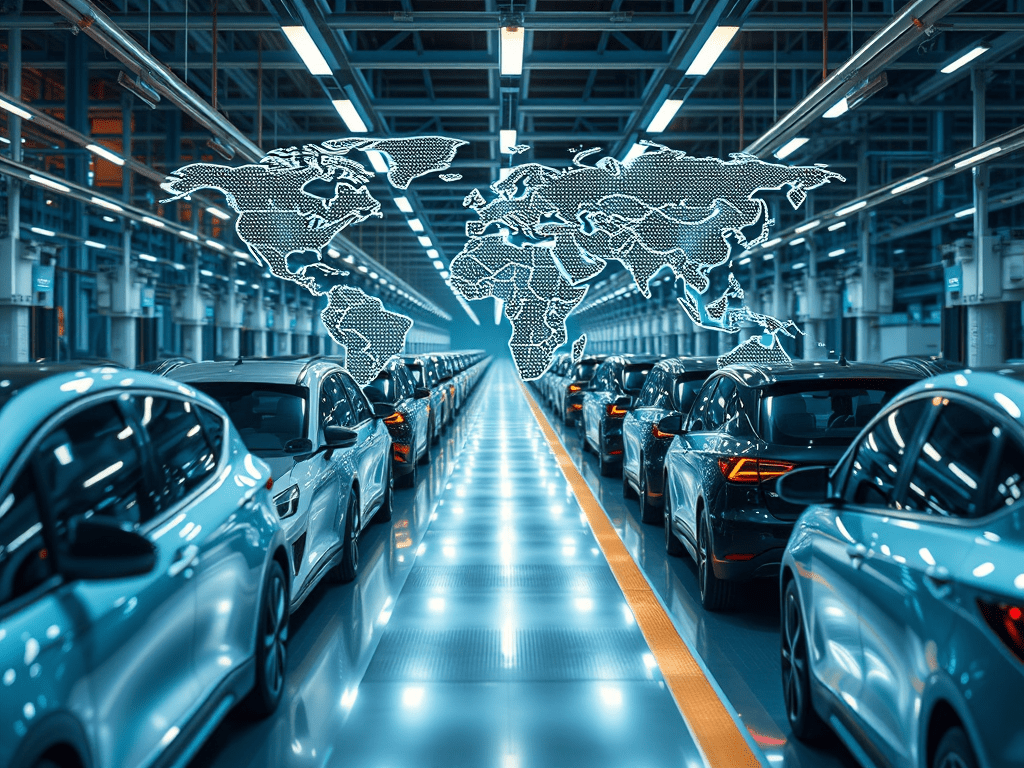
China has emerged as the undisputed leader in the global electric vehicle (EV) revolution. With over 8 million EVs sold in 2023 alone, the country accounts for 60% of global electric car sales, reshaping both its domestic automotive landscape and international markets. This article examines the key factors behind China’s EV dominance, its challenges, and its implications for the future of sustainable transportation.
1. Government Policies: Fueling the EV Boom
China’s EV success is rooted in aggressive government support. Key initiatives include:
- Subsidies and Tax Breaks: Direct consumer incentives reduced EV prices by up to 30% between 2016–2022.
- Dual-Credit Policy: Mandates automakers to produce a minimum percentage of EVs or purchase credits from competitors.
- Infrastructure Investment: Over 6.8 million public charging stations installed nationwide as of 2023.
These policies align with China’s “Carbon Neutrality by 2060” pledge, positioning EVs as critical to reducing fossil fuel dependence.
2. Domestic Innovation and Technological Leadership
Chinese companies like BYD, NIO, and XPeng are driving innovation through:
- Battery Technology: CATL (China’s top battery maker) controls 37% of the global EV battery market.
- Smart EVs: Integration of AI, autonomous driving, and 5G connectivity.
- Affordable Models: BYD’s Seagull (priced under $10,000) dominates budget-friendly EV segments.
In 2023, Chinese automakers exported 1.2 million EVs, challenging traditional giants like Tesla and Volkswagen.
3. Global Expansion and Market Disruption
China’s EV industry is no longer confined to its borders:
- European Market Penetration: Brands like MG and BYD captured 8% of Europe’s EV sales in 2023.
- Strategic Partnerships: CATL collaborates with Tesla, Ford, and BMW to supply batteries.
- Resource Control: Chinese firms secure lithium and cobalt mines in Africa and South America.
However, trade barriers (e.g., EU anti-subsidy investigations) pose challenges to unchecked growth.
4. Challenges Ahead
Despite its dominance, China faces hurdles:
- Overcapacity: Domestic EV production exceeds demand, triggering price wars.
- Geopolitical Tensions: Export restrictions and supply chain decoupling risks.
- Sustainability Concerns: Recycling of lithium-ion batteries remains underdeveloped.
Conclusion: Shaping the Future of Mobility
China’s EV industry is a blueprint for combining policy ambition, technological innovation, and market scale. As the country transitions from fossil fuels, its EV advancements will influence global climate goals and redefine automotive competitiveness. For investors and policymakers worldwide, understanding China’s EV trajectory is no longer optional—it’s essential.
 Wonder-Ware
Leave a comment