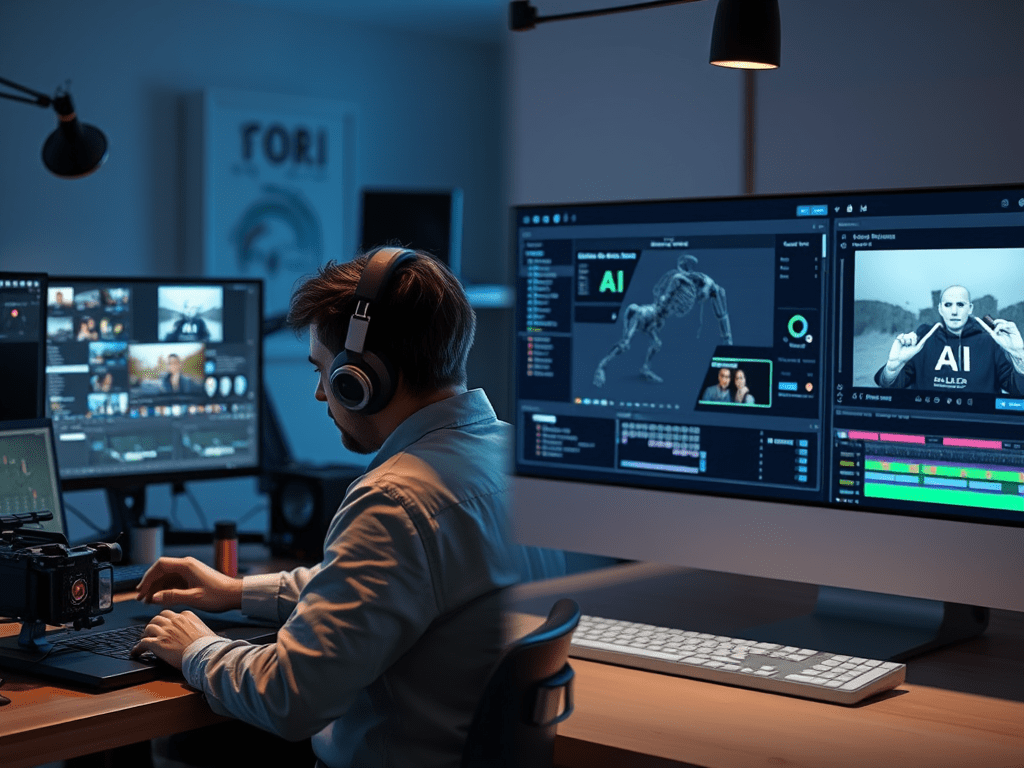
The rapid advancement of AI in video editing—from auto-cut tools to AI-generated voiceovers—has sparked a pressing question: Will artificial intelligence replace human video editors? While AI is transforming the industry, the answer isn’t a simple yes or no. Let’s examine the current capabilities, limitations, and future of AI in video production.
AI’s Current Role in Video Editing
Today, AI-powered tools handle many repetitive and technical tasks, including:
- Automated Cutting & Sequencing: Tools like Adobe Premiere Pro’s Auto Reframe or Descript’s AI editing analyze footage and assemble rough cuts based on pacing, speaker detection, or predefined templates.
- AI Voiceovers & Dubbing: Platforms like ElevenLabs and Murf.ai generate human-like narration, while HeyGen clones voices for multilingual dubbing.
- Smart Object Removal & Rotoscoping: Runway ML and Adobe Firefly can isolate subjects, remove backgrounds, or even extend footage using generative AI.
- Color Correction & Enhancement: AI tools like DaVinci Resolve’s Color Match adjust tones and lighting automatically.
These innovations save hours of manual work, allowing editors to focus on storytelling and creativity.
Can AI Fully Replace Human Editors?
While AI excels at efficiency, key limitations remain:
- Lack of Creative Judgment: AI can assemble clips but struggles with emotional pacing, humor, or artistic nuance—elements that define great editing.
- Context Blindness: An AI might “perfectly” cut a dialogue scene but miss subtext, actor chemistry, or narrative tension.
- Over-Reliance on Templates: Many AI tools produce generic results, risking a homogenized “algorithmic style” (think bland corporate videos or repetitive social media content).
The Future: Collaboration, Not Replacement
The most likely scenario is a human-AI partnership, where:
- Editors use AI for tedious tasks (transcoding, rough cuts, subtitling) and focus on high-level creativity.
- New roles emerge, like “AI editing supervisors” who fine-tune automated outputs.
- Niche editing (e.g., films, music videos) remains human-driven, while bulk content (social clips, ads) becomes increasingly automated.
Preparing for the Shift
Video professionals can future-proof their careers by:
- Mastering AI Tools: Learning platforms like Runway ML or Pika Labs to stay competitive.
- Focusing on Storytelling: AI can’t replicate human emotion or originality.
- Specializing: High-end color grading, VFX, or documentary editing will remain in demand.
Conclusion
AI won’t replace video editors—but editors who ignore AI will fall behind. The future belongs to those who harness automation to enhance creativity, not compete with it.
What’s your take? Are you using AI in your workflow, or do you see it as a threat? Share your thoughts below.
 Wonder-Ware
Leave a comment