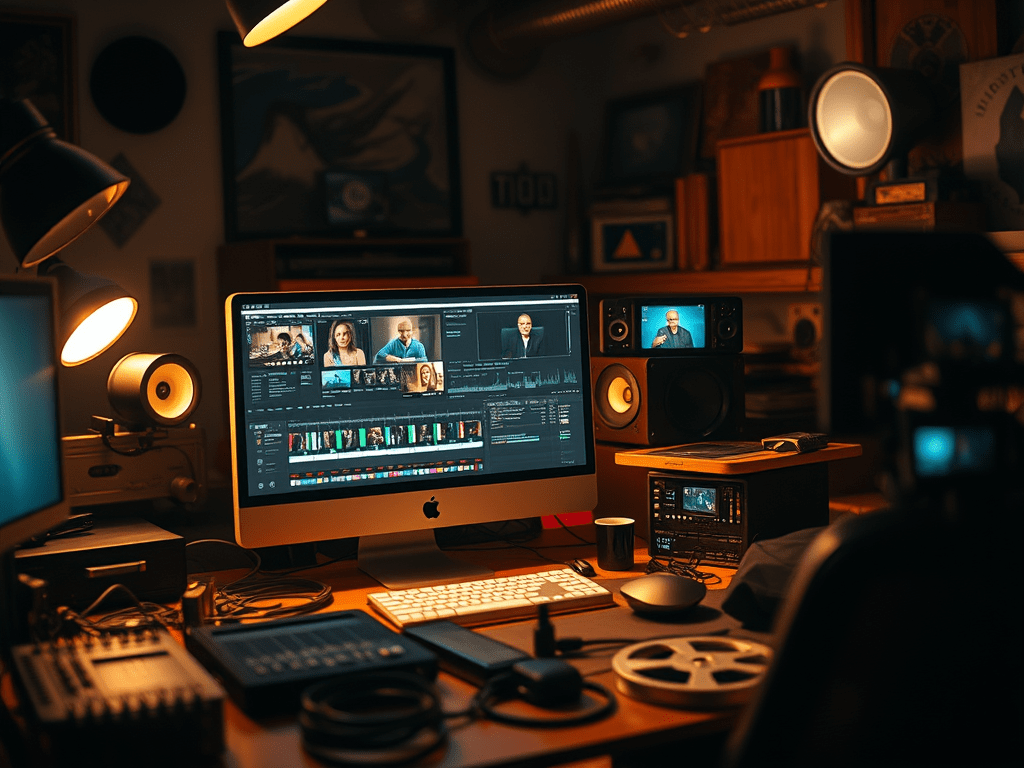
In the world of content creation, your editing room is your secret laboratory. It’s where raw footage transforms into a story, and where you, as a creator, imprint your unique signature. This signature is your editing style—the invisible hand that guides your viewer’s experience and emotions.
But how do you find something as intangible as a “style”? It doesn’t happen overnight. It’s a journey of discovery, experimentation, and refinement. If you’re feeling lost in a sea of transitions and filters, here’s a guide to help you develop a consistent and authentic editing approach.
Why Your Editing Style Matters
Before we dive in, let’s establish why it’s so crucial:
- Brand Identity: A consistent style makes your videos instantly recognizable, even before your logo appears. It becomes a core part of your brand.
- Audience Connection: A distinct rhythm and mood help your audience know what to expect, building trust and loyalty.
- Storytelling Power: Editing is not just about cutting; it’s about pacing, emphasizing emotions, and telling a story. Your style is the language you use to tell it.
The Pillars of Editing Style
Your style is built on several key pillars. To find yours, start by deconstructing the work of others and analyzing your own preferences.
1. Pacing & Rhythm:
- Fast-Paced: Think quick cuts, rapid-fire sequences, and high-energy music. Common in gaming, vlogging, and tech reviews.
- Slow & Cinematic: Leans on lingering shots, slow-motion, and deliberate pauses to build atmosphere and emotion. Perfect for travel films and documentaries.
- Conversational: Matches the natural flow of speech. Common in interview-based content and educational videos, using simple cuts (J-cuts and L-cuts) to feel seamless.
Ask yourself: Does my content thrive on adrenaline, or does it require space for the viewer to breathe and reflect?
2. Transitions & Motion:
- Hard Cuts: The most basic cut. A clean, direct style that feels professional and straightforward.
- Dynamic Transions: Whips, zooms, and spin transitions create a high-energy, interconnected feel.
- Matched Cuts & Invisible Transitions: These are more advanced and artistic, used to create a seamless flow that serves the narrative.
Ask yourself: Do I want my transitions to be invisible, or do I want them to be a noticeable part of the aesthetic?
3. Color Grading & Tone:
This is one of the most powerful stylistic choices.
- Warm & Vibrant: Evokes feelings of happiness, nostalgia, or adventure.
- Cool & Moody: Creates a sense of drama, mystery, or sophistication.
- Desaturated & Flat: Often used for a gritty, realistic, or cinematic documentary feel.
Ask yourself: What emotional tone do I want my videos to have? What color palette best supports that?
4. Audio Design:
Your style isn’t just visual.
- Music Choice: Are you using epic orchestral scores, lo-fi beats, or trending pop songs?
- Sound Effects (SFX): Do you use subtle, realistic sounds or prominent, stylized SFX (like a classic “whoosh” or a comedic “sting”)?
- Audio Mixing: Is your voice crisp and upfront? Is the music a quiet bed or a driving force?
A 5-Step Guide to Developing Your Style
1. Consume with Purpose.
Watch videos you admire—not just as a viewer, but as a student. Pause and ask: Why did they cut here? How does the music change with the scene? What is the color palette trying to tell me? Create a “swipe file” of edits you love.
2. Imitate to Innovate.
Don’t be afraid to copy techniques you like. Trying to recreate a sequence from your favorite creator is one of the best ways to learn why it works. You’ll never replicate it exactly, and in that gap, your own style will begin to emerge.
3. Audit Your Own Content.
Look at your last 3-5 videos. What do they have in common, even unintentionally? You may already have the seeds of a style without realizing it. Recognize what feels authentic to you and lean into it.
4. Define Your “Why.”
Your content’s purpose should influence your style. If your “why” is to educate, your style should prioritize clarity. If it’s to entertain, it should prioritize energy and surprise. Let your mission dictate your tools.
5. Create a “Style Guide.”
Once you identify patterns you like, document them! This doesn’t need to be complex. It can be a simple note with:
- My Go-To Transition: Hard cuts, with occasional whip transitions for energy.
- My Color Palette: Warm and slightly saturated.
- My Music Vibe: Upbeat, indie folk.
- My Pace: Medium-fast, with slow-motion for impactful moments.
This guide will keep you consistent as you create.
The Final Cut
Finding your editing style is a continuous process of evolution. As you grow and the platforms change, so will your style. The goal is not to find a perfect, permanent box to fit into, but to develop a coherent and authentic voice that makes your videos undeniably yours.
So open your editing software, not with anxiety, but with curiosity. Experiment, play, and remember: every cut is a step toward defining your unique creative signature.
What are the key elements of your editing style? Share them below!
 Wonder-Ware
Leave a comment