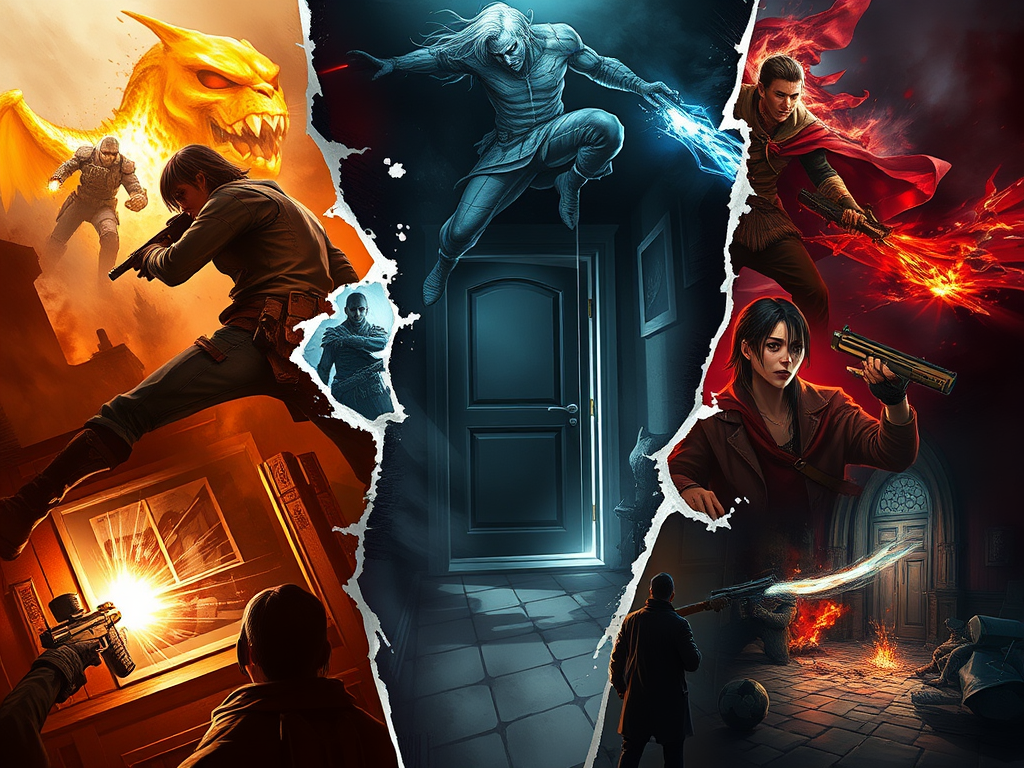
In the meticulously crafted worlds of video games, every element serves a purpose. While narrative, mechanics, and art direction often dominate discussions of design, one subtle yet profoundly impactful component is frequently overlooked: the transition. Transitions—the visual, auditory, and temporal bridges between gameplay states, levels, menus, or narrative beats—are far more than mere technical necessities. When designed with gameplay awareness, they become powerful tools for enhancing immersion, reinforcing genre conventions, and elevating artistic style. This article explores the critical practice of tailoring transition effects to a game’s core genre and overarching aesthetic.
The Function of Transitions: Beyond Utility
At its most basic, a transition manages loading, hides latency, or signals a change. However, a gameplay-aware transition actively participates in the player experience. It can:
- Control Pacing: A slow fade to black creates tension or solemnity; a swift, sharp cut maintains adrenaline.
- Reinforce Feedback: A satisfying “flash and zoom” on a critical hit confirms player success in a visceral way.
- Sustain Immersion: A transition that respects the game’s diegesis (e.g., a character blinking, a door opening) prevents disruptive breaks in the player’s belief.
- Emphasize Theme: A glitch effect for a cyberpunk game, or a parchment-style wipe for a historical adventure, directly supports the narrative and artistic vision.
Aligning with Genre Conventions
Different genres cultivate different player expectations and psychological states. Transitions must speak this language.
- Fast-Paced Action (FPS, Hack & Slash): Here, speed and clarity are paramount. Transitions are often instantaneous or use rapid, dynamic effects like screen shakes, quick fades, or motion blurs that match the velocity of gameplay. A sudden slow-motion effect upon defeating the last enemy, followed by a swift zoom to the loot, feels rewarding and seamless.
- Horror & Psychological Thrillers: Transitions are a primary tool for dread. Extended fades to black, distorted screen effects (like static or film grain), and lingering pauses can build unbearable tension. The classic “door opening” animation, often slow and creaky, serves as both a transition and an anxiety-raising mechanic.
- Role-Playing Games (RPGs): RPGs often benefit from transitions that feel grandiose or narrative-heavy. Wipes that resemble turning a page, elaborate spell-casting animations to enter new areas, or stylized map travel sequences all reinforce the epic, story-driven journey.
- Puzzle & Strategy Games: Clarity and spatial awareness are key. Transitions should be smooth and logical, often panning or zooming across a game board or isometric map. They can highlight the cause-and-effect of a player’s move, like a piece sliding elegantly into place, bridging the gap between turns with intellectual satisfaction.
- Casual & Mobile Games: Bright, playful, and rewarding transitions are common. Bouncy animations, particle bursts, and cheerful sounds for menu interactions or level completion create a consistent feel-good feedback loop essential to the genre’s appeal.
Harmonizing with Artistic Style
A transition must be an extension of the game’s visual and auditory identity. A mismatch here can shatter immersion instantly.
- Pixel Art / Retro: Transitions can emulate CRT monitor effects (scanlines, phosphor glow), classic screen wipes (like in 16-bit RPGs), or even intentional “screen crack” effects from older hardware. These nostalgic cues deepen the stylistic commitment.
- Minimalist / Abstract: Transitions should be geometrically simple and clean. Smooth shape morphing, color field fades, or the elegant movement of UI elements align with this aesthetic, avoiding overly complex or “juicy” effects that would feel out of place.
- Cinematic / Realistic: For games seeking a filmic quality, transitions should mimic cinematic language—carefully composed cross-dissolves, whip pans, depth-of-field shifts, and match cuts that feel directed rather than merely triggered.
- Hand-Drawn / Painterly: Transitions can themselves be animated artworks: ink bleeding across the screen, a canvas tear revealing a new scene, or a brushstroke wiping the frame. This integrates the transition directly into the core art asset pipeline.
The Principles of Implementation
Designing effective transitions requires a balanced approach:
- Consistency: Establish a coherent vocabulary of transitions used throughout the game for similar actions.
- Duration: Respect the player’s time. A transition should never be longer than its functional or emotional purpose warrants. Skippable transitions after the first view are often a prudent courtesy.
- Performance: The most beautiful transition is detrimental if it causes frame rate stutter. Optimization is non-negotiable.
- Player Agency: Whenever possible, transitions should feel like a consequence of the player’s action, not an arbitrary interruption.
Conclusion
Gameplay-aware transitions represent the hallmark of a polished, thoughtful game. They are the silent conductors of the player’s emotional and experiential rhythm. By moving beyond the purely functional and meticulously aligning transition effects with the specific demands of genre and the nuances of artistic style, developers can achieve a deeper harmony in the player experience. In doing so, they transform a technical process into an art form—one that subtly, yet powerfully, ensures the player remains seamlessly connected to the world they have chosen to inhabit. The best transition is the one the player feels not as a break, but as a beat in the heart of the game itself.
 Wonder-Ware
Leave a comment